
Published June 22, 2026
New Construction vs. Existing Home: Pros, Cons, and Hidden Costs

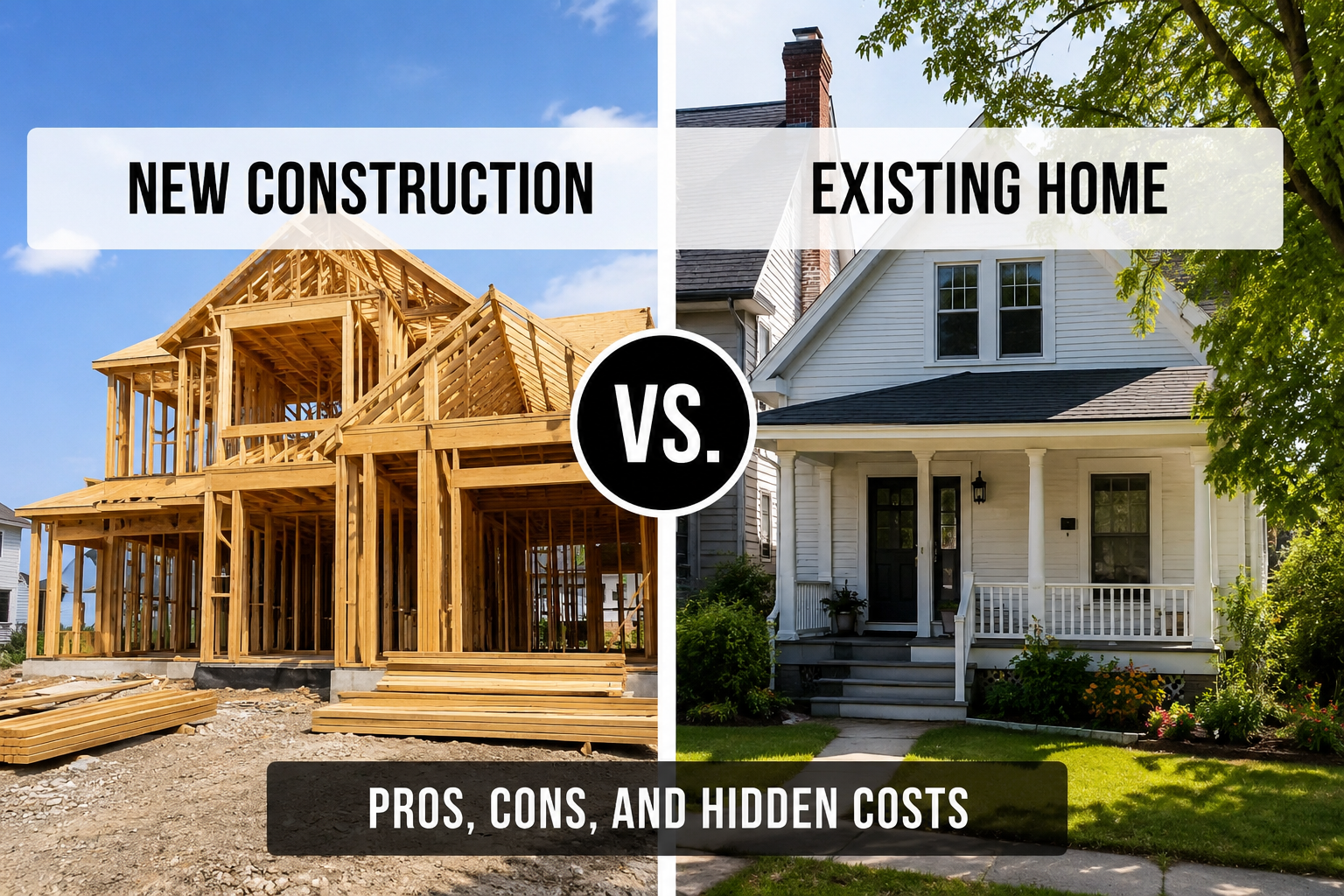
One of the biggest decisions you'll make as a homebuyer isn't just where to buy — it's what to buy. And for a lot of people, that comes down to a choice between a brand-new construction home and an existing one.
Both are great options. Both can be the perfect fit depending on your situation. The key is knowing what you're really comparing — including the costs and considerations that don't always show up in the listing price.
Let's walk through it.
New Construction: What to Love
There's something special about being the first person to live in a home. Everything is clean, current, and built to your preferences. Here's what makes new construction so appealing:
It's yours from the start. No one else's paint colors, no outdated fixtures, no wondering what's behind the walls. Many builders let you customize finishes, layouts, and features during the build process — so you're getting a home that actually reflects your taste.
Lower maintenance in the early years. New systems mean new warranties. Your roof, HVAC, appliances, and plumbing are all fresh, which means fewer unexpected repair bills in those first few years of ownership.
Built to current standards. New homes are constructed to modern building codes, which means better energy efficiency, updated electrical systems, and improved insulation compared to older homes. That often translates to lower utility bills.
Builder incentives can be significant. Many builders offer rate buydowns, closing cost assistance, or upgrade packages — especially when they're trying to move inventory. These incentives can make new construction more affordable than it looks on paper.
New Construction: Things to Keep in Mind
The base price isn't always the final price. This is one of the most common surprises buyers experience with new construction. That attractive listing price often reflects a base model — before upgrades. Flooring, countertops, lighting packages, and landscaping can add up quickly. It's worth going in with a clear budget for upgrades and sticking to it.
Location options can be limited. New construction is built where land is available, which isn't always where you want to be. If being close to a specific school, neighborhood, or part of town matters to you, your options may be narrower.
The timeline is a factor. If you need to move by a certain date, new construction can be tricky. Build timelines shift, and delays happen. It's something to plan around — especially if you're selling a home at the same time.
The neighborhood is still taking shape. Mature trees, established neighbors, finished landscaping — those things take time. If you're buying in a new development, you're also investing in what it will become, not just what it is today.
Existing Homes: What to Love
There's a reason existing homes make up the majority of real estate transactions — they offer a lot that new construction simply can't replicate.
Established neighborhoods. Tree-lined streets, longtime neighbors, proximity to schools and amenities — existing homes are often in areas that are already fully formed. You know what you're getting.
More negotiating room. Unlike buying from a builder, purchasing from an individual seller gives you more flexibility to negotiate on price, closing costs, repairs, and terms. In today's market, that can be a real advantage.
Character and charm. Craftsman details, hardwood floors, built-in bookshelves — older homes often have architectural character that's hard to replicate in new construction. If that matters to you, existing homes are where you'll find it.
Faster move-in. The home exists. Once you close, it's yours. No waiting on build timelines or worrying about delays.
Existing Homes: Things to Keep in Mind
Repairs and updates are part of the deal. Even a well-maintained existing home will have things that need attention over time — and sometimes sooner than expected. A thorough inspection helps you understand exactly what you're walking into, which is why we always recommend one.
Systems may be aging. An older roof, an HVAC system with some years on it, or plumbing that needs updating can all add to your costs after closing. These aren't dealbreakers, but they're worth factoring into your budget.
Less customization. You're buying what's there. You can renovate over time, but you're working with an existing footprint, layout, and bones. Some buyers love that challenge — others prefer to start fresh.
Bidding competition. In desirable neighborhoods, well-priced existing homes can still move quickly and attract multiple offers. Being prepared and working with an experienced agent makes a real difference here.
The Hidden Costs Worth Talking About
Whichever route you go, there are costs beyond the purchase price that are worth planning for:
- New construction: Upgrades above the base price, landscaping (often not included), window coverings, and the cost of waiting if your timeline shifts
- Existing homes: Immediate repairs flagged during inspection, updating older systems, and cosmetic updates to make the space your own
- Both: Closing costs, moving expenses, and the cost of any changes you want to make in year one
Neither option is inherently more expensive — it really comes down to what's included and what you're expecting going in. The buyers who feel best about their purchase are the ones who went in with clear eyes on the full picture.
So Which One Is Right for You?
Honestly, it depends on your priorities — your timeline, your budget, your lifestyle, and what matters most to you in a home. There's no universal right answer, and we've helped buyers find their perfect fit on both sides.
What we can tell you is that having the right guidance through either process makes a huge difference. We know the local market, we know the builders, and we know what questions to ask — so you don't have to figure it out alone.
📞 Ready to explore your options? Let's have a conversation — Gregory Home Team would love to help.

Sherri Gregory
CEO | Principal Broker | Gregory Home Team | Keller Williams Realty | PLACE
or another way