
Published June 29, 2026
What Happens If the Appraisal Comes In Low?

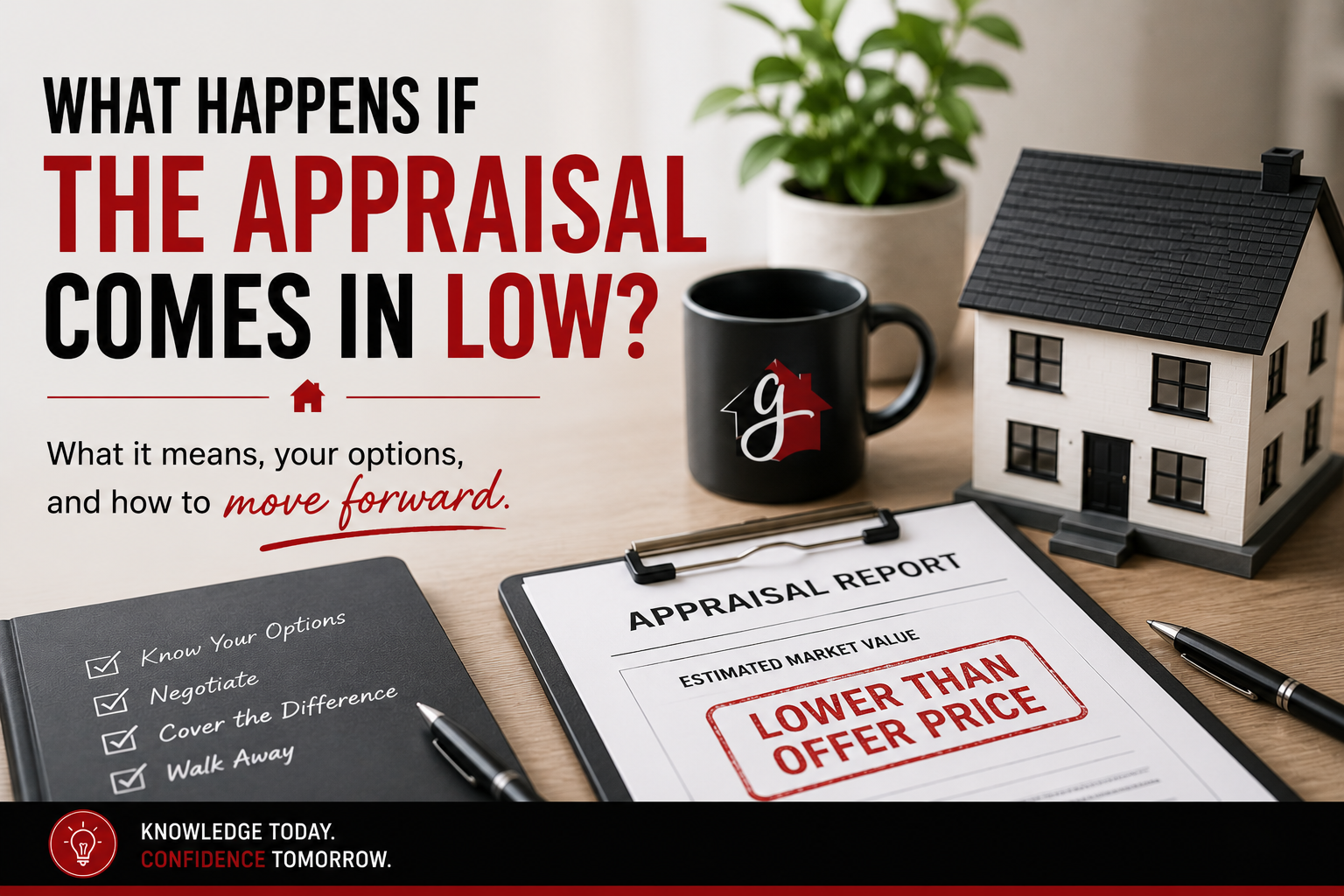
You've made your offer, the seller accepted, and things are moving along. Then the appraisal comes back and it's lower than the purchase price. It's one of those moments that can feel alarming if you don't know what it means or what happens next.
The good news is that a low appraisal doesn't automatically mean the deal is dead. There are several ways to handle it, and knowing your options going in makes a big difference.
What Is an Appraisal and Why Does It Matter?
When you're financing a home purchase, your lender needs to know that the home is worth what you've agreed to pay for it. They're not just lending you money based on your word or the seller's asking price. They hire a licensed, independent appraiser to assess the property and determine its market value based on comparable sales, condition, location, and other factors.
The lender will only loan up to the appraised value. So if you've agreed to pay $320,000 for a home and it appraises at $300,000, there's a $20,000 gap that needs to be addressed one way or another before the transaction can move forward.
Why Do Appraisals Come in Low?
It happens for a few different reasons. In a fast moving market where prices are rising quickly, comparable sales used by the appraiser may not fully reflect the current market. Sometimes the appraiser uses sales from a slightly different area or time period that don't accurately represent the value of the specific home. In other cases the purchase price was simply higher than what the market data supports.
Whatever the reason, a low appraisal puts both the buyer and seller in a position where they need to figure out how to bridge the gap.
Option 1: The Seller Reduces the Price
The most straightforward resolution is for the seller to lower the purchase price to match the appraised value. This eliminates the gap entirely and lets the transaction move forward as planned.
Whether a seller is willing to do this depends on their situation, their motivation, and how the market looks at that moment. In a buyer friendly market, sellers are often more willing to negotiate. In a competitive market with other interested buyers, they may be less inclined to budge.
Option 2: The Buyer Makes Up the Difference
If the seller won't reduce the price, the buyer has the option to cover the gap out of pocket. Using the same example, if the home appraises at $300,000 but you agreed to pay $320,000, you would need to bring an additional $20,000 to the closing table on top of your down payment and closing costs.
This is called paying above appraised value, and it's a decision that needs to be made carefully. It means you're starting out with less equity in the home from day one, so it's worth thinking through whether the home is worth that to you and whether your financial situation supports it comfortably.
Option 3: Meet in the Middle
In many cases the buyer and seller split the difference. The seller comes down on price and the buyer agrees to cover part of the gap. This is often the most realistic outcome when both parties are motivated to make the deal work and neither one wants to walk away.
How you negotiate this depends on the strength of the original offer, the relationship between buyer and seller, and how much flexibility exists on both sides. Your agent will be a key part of working through this conversation.
Option 4: Challenge the Appraisal
If there are legitimate reasons to believe the appraisal was inaccurate, it is possible to dispute it. This typically involves providing the appraiser or lender with additional comparable sales data that better reflects the home's value.
This option doesn't always work, and it's not something to pursue without a good reason. But if there are clear comparable sales that were overlooked or if there are factual errors in the appraisal report, it's worth exploring with your agent and lender before assuming the number is final.
Option 5: Walk Away
If you have an appraisal contingency in your contract and the gap can't be resolved to your satisfaction, you have the right to exit the transaction and get your earnest money back.
This is always a last resort, but it's an important protection to have in place. It means a low appraisal doesn't force you into a situation where you're either overpaying significantly or losing your deposit. Your agent will make sure this contingency is included in your contract from the start.
What About Cash Buyers?
Cash buyers aren't subject to a lender's appraisal requirement, which means a low appraisal doesn't create the same kind of obstacle. That said, many cash buyers still choose to get an independent appraisal to make sure they're paying a fair price. It's simply not a lender requirement.
The Bottom Line
A low appraisal is one of those things that sounds scarier than it usually is. In most cases there is a path forward, and with the right agent negotiating on your behalf the gap gets resolved without the deal falling apart.
The key is going into the transaction with the right contingencies in place and an experienced team who knows how to handle these situations calmly and effectively when they come up.
📞 Have questions about the appraisal process or buying a home in the Mid-Willamette Valley? Gregory Home Team is here to help.

Sherri Gregory
CEO | Principal Broker | Gregory Home Team | Keller Williams Realty | PLACE
or another way